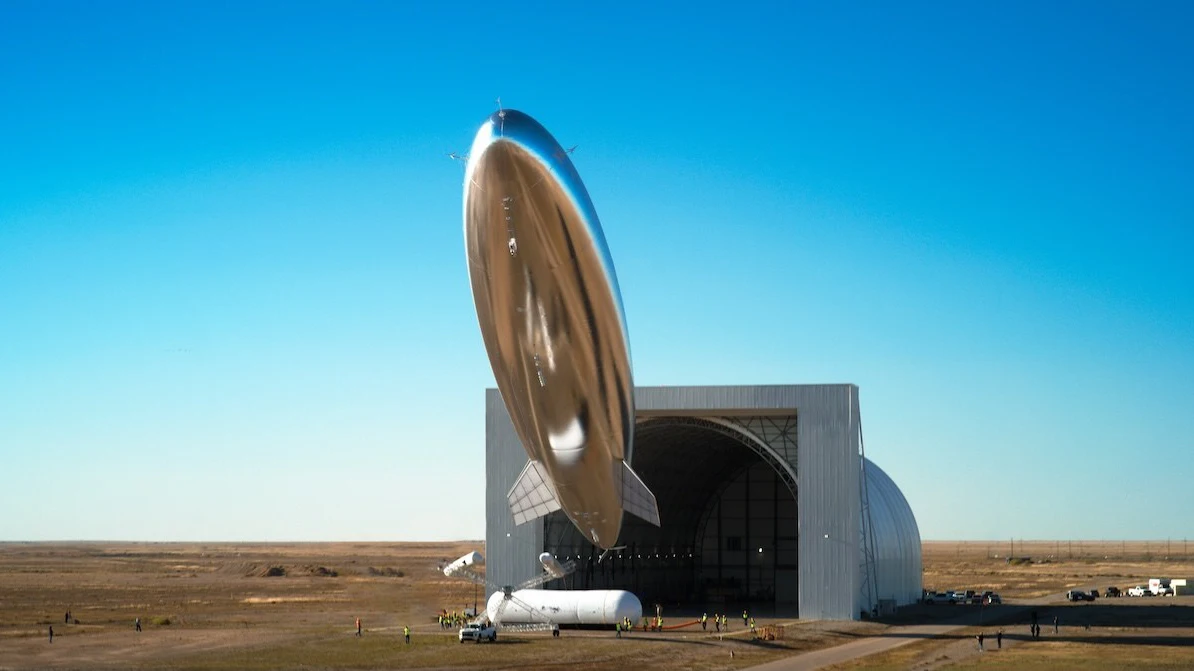
How Sceye’s Stratospheric Airships Keep Track Of Greenhouse Gases
1. The Monitoring Gap Can Be Much More than most people realize
Carbon dioxide emissions across the planet are monitored through a series of ground stations, periodic aircraft campaigns, and satellites that operate hundreds of kilometers above the ground. Each has its limitations. Ground stations are not as extensive and geographically oriented toward wealthy nations. Aircraft trips are expensive shorter-duration, as well as narrow in their coverage. Satellites are global in scope, however they have difficulty with the resolution needed to pinpoint precise emission sources such as such as a pipeline that is leaking, a landfill releasing methane, or an industrial facility that fails to report its output. This results in the monitoring system has significant problems at the exact extent where accountability and control are crucial. Stratospheric platforms are being increasingly perceived as being the missing middle layer.
2. It’s an advantage to be at altitude. Satellites aren’t able to duplicate
There’s a logic behind why 20 kilometres beats 500 kilometers in emissions monitoring. A sensor operating at stratospheric altitude could see a footprint of several hundred kilometres whilst remaining close enough distinguish emission sources at meaningful level of resolution. These include individual facilities roads, road corridors, agricultural zones. Satellites viewing the same area from low Earth orbits cover it much faster but with fewer granularity and the times to revisit mean that a methane plume that appears and is dispersed in just a few hours will not be captured. A platform holding its position over a particular area for a few days or even weeks at a time turns intermittent snapshots into something closer to continuous surveillance.
3. Methane is the most important target for a Reason
Carbon dioxide garners the most of the public attention, but methane is the greenhouse gases where close-to-term monitoring improvements could bring the biggest practical difference. Methane’s effects are significantly greater than CO2 over a 20-year timeframe, and a substantial portion of methane emissions from humans originate through point sources — pipelines and oil infrastructure and waste facilities, as well as agriculture operations — which can be detected and in many cases repairable when they are discovered. Methane monitoring that is real-time and from an ever-present stratospheric platform will mean regulators, operators, and governments can recognize leaks when they occur rather then identifying them a few months later in annual inventory reconciliations which usually rely on estimates rather that measurements.
4. Sceye’s Airship Design is Suited to the Monitoring Mission
The features that make up a great telecommunications system and the best environmental monitoring platform have more in common than you think. Both require a long-lasting endurance stability, stable positioning, and significant payload capacity. Sceye’s lighter than air airship model is able to meet all three requirements. Since buoyancy serves the basic job of keeping the aircraft in a safe position this means that the system’s energy bill doesn’t go to generating lift which is used for propulsion and station keeping and powering the sensor is required for the mission. When it comes to monitoring greenhouse gases, specifically this includes carrying instruments for spectrometers, imaging systems and data processing tools without the hefty weight restrictions that make fixed-wing HAPS designs unsuitable.
5. Station Keeping Is Not Negotiable for Useful Environmental Data
A monitoring platform that drifts is a platform for monitoring, producing data that’s difficult to analyze. Knowing precisely where a sensor was at the time it took a measurement is crucial in determining the source of that reading to a source. Sceye’s emphasis upon true station keeping – holding the position of a fixed point above a goal area with active propulsion It’s more than being a performance measure for technical reasons. It’s the reason why the data is legitimately defended. Stratospheric Earth observation only becomes really useful for regulatory or legal reasons when the positional record is robust enough to stand up to scrutiny. Drifting balloon platforms, no matter how robust their sensors may be, they don’t offer this.
6. The same platform can monitor Oil Pollution and Wildfire Risks Simultaneously
One of most appealing aspect of the multipayload model is the fact that naturally, different environmental monitoring missions work together on the very same car. A vessel operating over areas of offshore or coastal regions could contain sensors geared towards detectable oil pollution along with those monitoring methane and CO2. On land, the same platform architecture allows for wildfire detection technology, allowing for the identification of smoke plumes, heat signatures as well as stress indicators for the vegetation which can precede ignition incidents. Sceye’s approach for mission design will not treat them as separate programmes requiring separate aircraft rather as parallel use cases for infrastructure already placed and operating.
7. Detecting Climate Disasters by monitoring changes in the real-time environment the Response Equation
There’s a huge difference between knowing that a fire started within six hours and being aware that it began just twenty minutes ago. This is the same for industrial accidents releasing toxic gases, flooding events threatening infrastructure, or sudden methane leaks from permafrost. The ability to detect climate-related disasters in real the time of a persistent stratospheric monitoring platform offers emergency managers authorities, government agencies, as well as industrial companies a chance for intervention that simply does not exist if monitoring relies upon orbital revisit cycles, satellites, or ground-based reports. The importance of this window increases when you consider that the early stages for most environmental emergencies are in the same timeframes when intervention is the most effective.
8. This Energy Architecture Makes Long Endurance Monitoring Viable
Environmental monitoring missions will only bring their greatest value if the platform stays on station longer enough to accumulate solid data records. A week of methane readings across an oil field can tell you something. Months of continuously collected data will tell you something genuinely actionable. Being able to maintain that endurance will require solving the problem of power consumption during the nightthe platform has to store enough power during daytime to allow for all devices throughout the night without disrupting position or sensor operation. The advancements in lithium-sulfur battery chemistry that have energy density of around 425 Wh/kg, combined with increasing solar cell efficiency are what make a closed power loop possible. But without these two, endurance remains an aspiration, not an actual requirement.
9. Mikkel Vestergaard’s Background Explains the Environment-related Focus
It’s important to comprehend why a high-tech aerospace company puts such a apparent emphasis on greenhouse-gas monitoring and detection of disasters rather than focusing on connectivity revenue. Mikkel Vestergaard’s expertise in applying technology in large-scale environmental and humanitarian issues gives Sceye the foundational stance that will determine which mission the company puts on its agenda and how it describes its platform’s goal. The environmental monitoring capabilities aren’t simply a payload grafted onto an aforementioned telecoms vehicle appear more socially responsible. Instead, they demonstrate a strong belief that stratospheric infrastructures should be conducting climate work, and it is possible for the same platform to accomplish both without compromising any one of them.
10. Data Pipeline Data Pipeline Is as Important as the Sensor
Data collection from greenhouse gases in the stratosphere is just half the equation. Transmitting that information to people who require it, in a format that they can decide on, and in a format that is like real-time is the second half. A stratospheric based platform with integrated processing capability as well as direct downlink to ground stations is able to reduce the gap between detecting and making a decision significantly as compared to systems which batch data to be later analyzed. For applications involving natural resource management such as regulatory compliance monitoring or emergency response, the timeliness of the information can be crucial as much as its precision. Integrating the data pipeline into the platform’s architecture from the start, rather than using it as a last resort is one of the things that makes a difference between serious stratospheric satellite earth observation from the flimsier sensor campaigns. Have a look at the recommended natural resource management for website tips including sceye haps airship payload capacity, Cell tower in the sky, Sceye News, Station keeping, Stratospheric platforms, SoftBank investments, space- high altitude balloon stratospheric balloon haps, sceye haps airship status 2025 2026, sceye disaster detection, aerospace companies in new mexico and more.

Wildfire And Disaster Detection From The Stratosphere
1. The Detection Window is the Most useful thing you can extend
Every major disaster is accompanied by a moment — often measured in minutes, and sometimes in hours — where early awareness would have changed the course of action. A wildfire spotted when it covers a quarter of hectare is an issue with containment. A similar fire is found when it covers fifty hectares is a crisis. A gas leak at work that is identified within the first two hours may be managed before it is a public health emergency. The same release found after three hours, either through the use of a ground report, or even a spacecraft passing overhead on a scheduled revisit, has already been able to spread into a situation with no solution that is clear. Extension of the detection window arguably the single most valuable feature that improved monitoring infrastructures can provide, and a continuous stratospheric observation is one of the few methods that alters the window meaningfully rather than slightly.
2. Wildfires are getting harder to Monitor with the current infrastructure
The volume and frequency wildfires of recent decades has outpaced the monitoring system designed to track them. Monitoring networks that rely on sensors in ground- sensors arrays, watchtowers, ranger patrols — only cover a tiny area and move in a way that they are not able to keep pace with fast-moving fires at their earliest stages. Aircraft response is efficient, but expensive, weather-dependent as well as reactive rather than anticipatory. Satellites pass through a area according to a frequency measured in hours. This means a fire which ignites it, spreads, or crowns between passes provides no warning at all. The combination of bigger fires with faster spreading rates caused durch droughts, and increasingly complex terrain creates monitoring gap that conventional approaches cannot structurally close.
3. Stratospheric Altitude Provides Persistent Wide-Area Visibility
A platform that operates from 20 kilometres or more above the surface will maintain visibility over a terrain footprint that extends several hundred kilometres — covering coastal areas, fire-prone regions, forest margins, and urban interfaces simultaneously and without interruption. As opposed to aircrafts, it does not require a return trip to replenish fuel. In contrast to satellites it doesn’t disappear in the horizon after a repeat cycle. Particularly for wildfire detection, this enduring wide-area visibility indicates that the platform will be watching as sparks are ignited, observing as initial spread happens, and watching as fire behaviour evolves offering a continuous flow of data instead series of unconnected snapshots that emergency officials must move between.
4. Heating and Multispectral Sensors Are able to detect fires Before Smoke Is Observable
Some of the best techniques for detecting wildfires don’t wait to see visible signs of smoke. Thermal infrared sensors detect heat patterns that can be interpreted as evidence of ignition even before a fire has even produced any visible signs for identifying hotspots found in dry vegetation and smouldering fires in the forest canopy and the initial flames’ heat signatures as they begin to develop. Multispectral imaging can be further enhanced through the detection of changes in vegetation conditions such as moisture stress dried, browning and dryingindicators of increased fire risk in specific areas before the ignition event takes place. A stratospheric system that incorporates the combination of these sensors will provide immediate warning of active combustion and an underlying prediction of where the next ignition is likely to occur, which offers a qualitatively broader range of awareness of the situation than traditional monitoring delivers.
5. Sceye’s Multipayload approach combines detection with Communications
One of the main issues of major disaster events is that the infrastructure that people rely on to communicate — mobile towers, internet connectivity, power lines — are usually among those first destroyed or overwhelmed. A stratospheric platform with both sensors for disaster detection and a communications payload addresses this problem from a single vehicle. Sceye’s approach to mission development treats connectivity and observation as distinct functions, not competing ones. This means that the device that detects a developing wildfire can simultaneously provide emergency communications to responders in the field whose land networks have gone dark. The cell tower that is in the sky not only sees the disaster — it also keeps people connected through it.
6. It’s a lot more than Wildfires
Wildfires may be one of many compelling applications for continuous monitoring of the stratosphere, the same capabilities of the platform are applicable to a broad range of disaster scenarios. Floods can be tracked throughout the development of waterways and coastal zones. Earthquake aftermaths – with affected infrastructure, blocked roads and displacement of populationsare benefited by rapid, broad-area assessments that ground teams don’t deliver in time. Industrial accidents releasing harmful gasses or oil pollution in coastal waters produce signs discernible by appropriate sensors from stratospheric altitude. Detecting climate disasters in real time across these areas requires a monitoring layer that is always present, always watching, and able to distinguish between normal variations in the environment and the signs of a developing disasters.
7. Japan’s Disaster Story Makes the Sceye Partnership Particularly Relevant
Japan experiences a disproportionate share of the world’s largest seismic occasions, experiences regular weather patterns that impact coastal areas, and is a victim of a history of industrial incidents needing a swift response from environmental monitors. The HAPS partnership has been formed between Sceye and SoftBank and SoftBank, which focuses on Japan’s national network and the pre-commercial services to be launched in 2026, sits directly at the intersection of stratospheric connectivity with disaster monitoring capability. A nation with Japan’s disaster risk and technological sophistication might be the most natural early adopter for stratospheric infrastructure which combines reliability in coverage with real-time surveillance that provides both the communications backbone that emergency response relies upon and the monitoring layer which early warning systems require.
8. Natural Resource Management Benefits From the Same Monitoring Architecture
The ability to detect and persist used by stratospheric platforms to detect wildfires or disasters have direct applications for natural resource management. These applications operate over longer periods of time, but need similar monitoring continuity. Monitoring of forest health — tracking spread of diseases, illegal logging, vegetation changes — reaps the benefits of the ability to monitor for slow-developing risks before they become severe. Monitoring of water resources across vast catchment areas coastal erosion monitoring and monitoring of protected areas from Encroachment are just a few examples of how the constant monitoring of a stratospheric system provides actionable information that regular aerial or satellite surveys cannot cost-effectively replace.
9. The Founder’s Vision Shapes What We Do. Disaster Detection Is Central
Understanding the reasons Sceye place such an emphasis on the prevention of environmental disasters and monitoring instead of treating connectivity as the main goal and monitoring as a supplementary benefitinvolves understanding the fundamental perspective that Mikkel Vestergaard contributed to the business. An experience in applying the latest technology to tackle large-scale humanitarian challenges has a distinct set of requirements than a commercial telecommunications focus would. The disaster detection feature isn’t retrofitted onto a connectivity platform in the form of a value-added component. It is a reflection of a belief that stratospheric networks should be actively utilized in the face of all kinds of situations — such as climate emergencies, environmental disasters humanitarian emergencies — where earlier and better information genuinely transforms outcomes for the populations that are affected.
10. Continuous Monitoring changes the relationship between Data and Decision
The larger shift that catastrophe detection at the stratospheric level enables doesn’t involve a speedier response to specific events it’s a fundamental change regarding how decision-makers approach the risks of the environment across time. In the case of intermittent monitoring, the decisions regarding resource deployment, evacuation planning, as well as infrastructure investments must be taken under the hazard of uncertainty over what’s happening. When monitoring is continuous the uncertainty gets a lot more pronounced. Emergency managers using real-time data from a permanent stratospheric system above their responsibilities are making decisions from a substantially different perspective to those who rely on scheduled satellite passes and ground reports. This shift in perspective — from periodic snapshots to continuous aware of the present the thing that makes stratospheric Earth observation using platforms such as those being created by Sceye to be truly transformative rather than incrementally useful. Take a look at the top rated sceye haps softbank partnership details for website info including solar cell efficiency advancements for haps or stratospheric aircraft, detecting climate disasters in real time, what is haps, what are haps, sceye lithium-sulfur batteries 425 wh/kg, High altitude platform station, Cell tower in the sky, what are high-altitude platform stations haps definition, Solar-powered HAPS, non-terrestrial infrastructure and more.